
Food & Beverage Industry Insights
Discover market intelligence, commodity trends, ingredient sourcing news, and expert technical guidance from American International Foods, Inc.
Market News & Commodity Trends
Stay ahead of price fluctuations, supply chain updates, and raw material availability across key food manufacturing sectors.
Expert Ingredient Solutions
Explore articles on organic, non-GMO, gluten-free, and conventional ingredient innovations for modern processors.
How to Choose Brining and Pickling Ingredients?
Table of Contents
- Understanding the Roles of Brining and Pickling Ingredients
- Choosing Salt, Water, and Acidity for the Desired Result
- Selecting Spices, Herbs, Sweeteners, and Flavor Enhancers
- Matching Ingredients to Different Foods and Preservation Goals
- Balancing Safety, Flavor, Texture, and Storage Requirements
- FAQS
- Conclusion
- Related Posts
Choosing the right Brining and Pickling Ingredients shapes flavor, texture, shelf life, and food safety. Salt, vinegar, sugar, water, herbs, spices, and fresh produce each serve a different purpose. A crisp cucumber may need a sharper brine, while green beans often benefit from balanced acidity and moderate seasoning. Small choices matter.
Experienced cooks usually begin with the produce. Firm vegetables tolerate stronger brines and longer soaking. Delicate fruits can become soft when exposed to high salt or acid. Use fresh, undamaged ingredients, clean equipment, and measured recipes from reliable culinary or food-safety sources. Salt concentration affects both taste and preservation. Vinegar acidity matters too. For shelf-stable products, use tested recipes and do not casually replace ingredients.
Taste carefully. Measure consistently.
I have found that visual judgment can be misleading. A brine may smell pleasant yet lack enough acidity for safe storage. Homemade pickles can also seem underseasoned on the first day, then develop deeper flavor after several days. That delay often encourages unnecessary adjustments. Patience helps, though it is not a substitute for safe instructions.
This guide explains how to compare Brining and Pickling Ingredients by function, quality, compatibility, and intended storage method. It will consider kosher salt, sea salt, vinegar varieties, sweeteners, aromatics, and water quality. Some traditional methods are excellent for refrigerated foods but unsuitable for room-temperature storage. That distinction is easy to overlook. Good results require curiosity, careful measurement, and a willingness to question familiar habits.
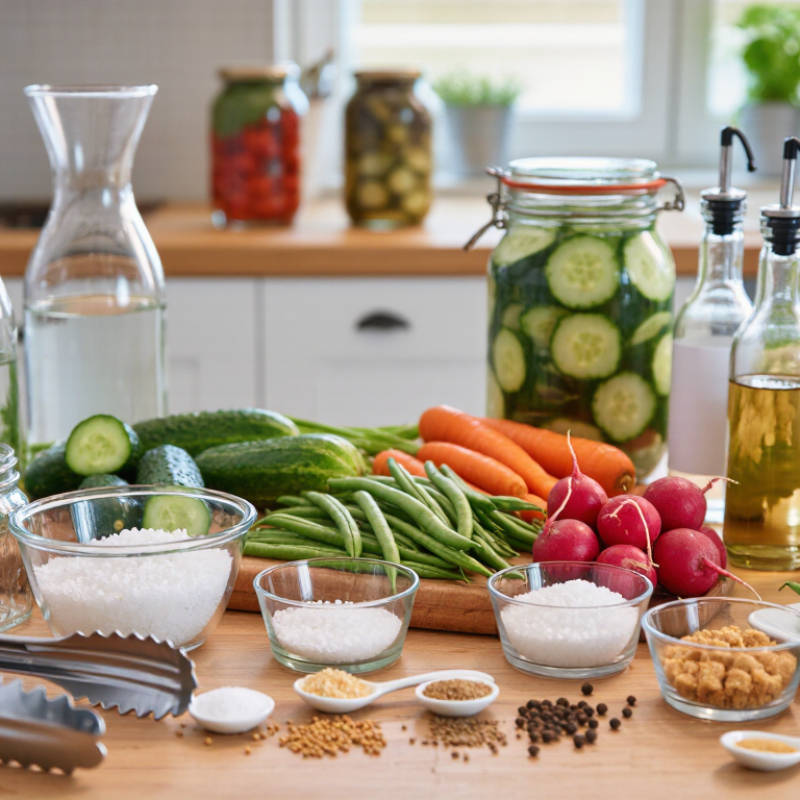
Understanding the Roles of Brining and Pickling Ingredients
How to Choose Brining and Pickling Ingredients?
Understanding the Roles of Brining and Pickling Ingredients
Salt does more than season food. In a brine, it draws water from vegetables and helps them retain firmness. It also supports controlled fermentation when suitable methods are followed. Use measured salt, not guesswork. Too much can create a harsh, heavy taste. Sugar softens salty flavors and gives onions, carrots, or fruit a rounded finish. I prefer weighing ingredients because spoon sizes can vary.
Pickling needs a sharper balance. Vinegar supplies acidity, while water reduces its intensity. The vinegar’s acidity matters, especially for refrigerated pickles and tested preservation methods. For shelf-stable products, follow a reliable recipe exactly. Do not casually reduce vinegar. Garlic, dill, mustard seed, pepper, and bay leaf mainly build aroma. They should support the main ingredient, not hide its natural taste.
Temperature and timing also shape the result. Thin cucumber slices absorb flavor quickly. Whole carrots need longer contact and may benefit from brief blanching. Keep vegetables fully submerged to limit unwanted exposure. Taste changes slowly. I once added too many spices, expecting stronger flavor, but the jar became muddy and bitter. That mistake reminded me to change one ingredient at a time. Record the salt, acid, water, and resting time. Recipes still need adjustment for vegetable size, freshness, and local water quality.
Choosing Salt, Water, and Acidity for the Desired Result
How to Choose Brining and Pickling Ingredients?
Choosing Salt, Water, and Acidity for the Desired Result
Salt does more than add flavor. It draws moisture from vegetables and helps create a stable brine. For quick pickles, measure salt by weight when possible. Different crystals occupy different volumes, which can quietly change the final concentration. Fine salt dissolves quickly. Coarse salt may need more stirring.
Water also matters. Chlorinated tap water can interfere with fermentation and leave a faint medicinal taste. Filtered water usually gives cleaner results. Hard water may cause cloudy brine or a dull surface. I would test a small batch before preparing several jars. That small test can prevent wasted produce.
Acidity controls brightness, texture, and safety. Vinegar with known acidity offers more predictable results than an uncertain homemade substitute. Never reduce vinegar in a shelf-stable pickling recipe unless the formula has been professionally tested. Lemon juice varies in strength, so it should not replace vinegar casually. Keep the vegetables fully covered, and use clean equipment throughout.
Taste develops slowly.
A balanced brine should taste sharp but not harsh. If the vegetables seem flat, the salt may be too low, or the acidity may need adjustment. If they taste aggressively sour, the vinegar may overpower their natural flavor. I sometimes prefer a gentler brine, but preference should never replace safe measurements. Fresh dill, garlic, peppercorns, or citrus peel can add character, yet they cannot correct an unstable salt or acid ratio.
Selecting Spices, Herbs, Sweeteners, and Flavor Enhancers
How to Choose Brining and Pickling Ingredients?
Choosing ingredients for brining or pickling starts with the food itself. Cucumbers need crisp, clean flavors, while carrots can handle stronger spices. Use non-iodized salt when possible, because some additives may cloud the liquid. Measure salt carefully with a scale. A small difference can change texture and taste.
Herbs and spices should support the main ingredient, not hide it. Dill, coriander, mustard seeds, bay leaves, garlic, and black peppercorns offer clear, familiar notes. Fresh herbs give a greener aroma, while dried herbs provide deeper concentration. Add citrus peel sparingly; too much white pith can create bitterness. I prefer whole spices because they are easier to remove and less likely to make the brine muddy.
Sweeteners balance sharp acidity and salty flavors. Sugar gives a clean finish, while honey or maple syrup adds a softer, fuller note. They do not replace safe acidity or correct storage practices. Use vinegar with known acidity, and follow a tested recipe for shelf-stable pickles. Refrigerate quick pickles promptly.
I once added too much garlic to a small jar, expecting a bold result. The flavor became harsh after two days. That mistake taught me to taste the brine before adding the vegetables. It is simple advice, but I still forget sometimes.
Start with less. Adjust carefully.
Matching Ingredients to Different Foods and Preservation Goals
How to Choose Brining and Pickling Ingredients?
Matching ingredients to the food is more important than choosing a fashionable recipe. Brining works well for poultry, pork, and firm vegetables. Salt draws in seasoning and helps the food retain moisture. For poultry, use a measured salt solution and keep the container refrigerated. Sugar can soften salty flavors, while herbs, garlic, peppercorns, and citrus peel add character without changing the main process.
Pickling needs a reliable acid source, usually vinegar with known acidity, or a tested fermentation method. Cucumbers stay crisp with firm produce, clean water, and short storage times. Carrots and onions can handle stronger spices, such as mustard seed or coriander. Delicate berries need less heat and a lighter brine. Acid matters.
I once used too much garlic in a vegetable pickle, and the result tasted harsh after two days. That mistake taught me to measure aromatics instead of guessing. Ingredients should also match the preservation goal. A quick refrigerator pickle focuses on flavor and texture, not long-term storage. Shelf-stable pickles require tested proportions, proper heat processing, and clean jars. Do not reduce the vinegar or salt casually. Small changes can affect safety. I still adjust sweetness carefully, because a sweeter brine can hide an overly sharp acid taste. For meat, brining improves seasoning, but it does not replace thorough cooking or safe refrigeration.
Salt levels shown are representative ranges for vegetable fermentation, while vinegar values refer to the acidity of the vinegar used for quick pickling. Fermented vegetables rely on salt and beneficial lactic-acid bacteria; quick pickles require vinegar with about 5% acidity. For shelf-stable preservation, use a tested recipe and verify that the finished food reaches a pH of 4.6 or lower.
Balancing Safety, Flavor, Texture, and Storage Requirements
Choosing brining and pickling ingredients requires more than matching salt, acid, and spices. Safety must guide every flavor decision. The FDA Food Code uses pH 4.6 as a critical boundary for controlling Clostridium botulinum growth. Use vinegar with verified 5% acidity, and never dilute tested recipes casually. The USDA Complete Guide to Home Canning also advises using tested proportions, because small changes can reduce acid protection. Measure with a calibrated pH meter when developing recipes. Taste alone cannot confirm safety.
Texture depends on timing, temperature, and produce quality. Firm cucumbers picked recently usually stay crisper than older ones. Food-grade calcium chloride may help, but it cannot repair soft vegetables. Keep brine concentration consistent with a kitchen scale. A cloudy jar may reflect salt impurities, starch, or microbial activity. Sometimes, the cause is unclear. That uncertainty deserves caution, not optimism. For refrigerated pickles, label the preparation date and keep storage temperatures at 4°C or below, consistent with FDA Food Code guidance. Shelf-stable products need a validated process, suitable heat treatment, and sealed containers. A tested recipe may still fail when vegetables differ in size, ripeness, or water content. Record those variables. Adjust flavor only after safety and texture remain stable.
How to Choose Brining and Pickling Ingredients? — Balancing Safety, Flavor, Texture, and Storage Requirements
| Ingredient or Factor | Primary Function | Typical Starting Range | Flavor Effect | Texture Effect | Safety and Storage Considerations | Best Use Case |
|---|---|---|---|---|---|---|
| Non-iodized salt Sodium chloride |
Draws out moisture, seasons food, and supports fermentation by favoring salt-tolerant microorganisms. | About 2–5% salt by weight for many vegetable ferments; meat brines vary widely by recipe and processing time. | Clean salinity; excessive amounts can mask acidity and other seasonings. | Can firm vegetables through moisture control; prolonged or highly concentrated brines may make some foods tough or overly dense. | Use a measured concentration rather than volume alone because crystal size differs. Fermented foods require proper submersion, temperature control, and acidification. | Fermented vegetables, cured foods, and refrigerated wet brines. |
| Vinegar Acetic acid solution |
Provides acidity, sourness, and preservation support in quick pickles. | Use only vinegar with a clearly stated acidity; many tested pickling recipes use vinegar of at least 5% acidity. | Sharp, sour, and aromatic; distilled vinegar is neutral, while wine, cider, or rice vinegar adds distinctive notes. | Acidity can gradually soften vegetables, especially during long storage or heat processing. | For shelf-stable pickles, use a tested recipe and do not dilute or substitute vinegar casually. The finished food should reach a pH of 4.6 or below for botulism control, with proper processing where applicable. | Quick refrigerator pickles and tested shelf-stable pickling recipes. |
| Water Brine base |
Dissolves salt, sugar, acids, and seasonings and controls the final concentration. | Adjust according to the target salt or acid percentage; measure water by weight for consistency. | Neutral when clean and low in off-flavors. | Hard water can interact with vegetables and minerals; water quality may affect clarity and flavor. | Use potable water. Water changes the concentration of every other ingredient, so substitutions should be calculated rather than estimated. | All brines and pickling liquids. |
| Sugar Granulated or other culinary sugar |
Balances acidity and saltiness; contributes to browning in some cooked applications. | Often about 1–10% of the liquid by weight, depending on the desired sweetness. | Rounds sharp acidity and creates sweet-and-sour profiles. | May slightly increase firmness by binding water, but it is not a substitute for a firming agent. | Does not make an unsafe product safe. Acidity, refrigeration, and validated processing still determine storage safety. | Sweet pickles, relishes, fruit pickles, and balanced quick-pickle brines. |
| Calcium chloride Food-grade firming salt |
Helps maintain vegetable firmness by strengthening pectin structure. | Follow the product label or a tested recipe; small quantities are generally used. | Usually neutral at correct levels; too much can create a bitter or mineral taste. | Improves crispness, particularly in cucumbers and other firm vegetables. | Use only food-grade material and do not rely on it for microbial safety. It cannot replace adequate acidity, salt control, refrigeration, or heat processing. | Crisp refrigerator pickles and tested processed-pickle recipes. |
| Citric acid Crystalline acid |
Adds acidity without the flavor profile of vinegar and helps lower pH. | Use only the amount specified in a tested recipe or by a validated formulation. | Bright, clean, lemon-like sourness; less aromatic than vinegar. | May help limit softening caused by some enzymatic reactions, but it does not guarantee crispness. | Acid quantity does not automatically predict final pH. For shelf stability, use a tested formula and verify process requirements. | Low-vinegar profiles, acidified foods, and recipes requiring a clean acidic taste. |
| Garlic, onion, herbs, and spices | Build aroma, warmth, heat, and complexity. | Adjust to taste; use a consistent weight when repeating a recipe. | Adds herbal, savory, spicy, earthy, or aromatic notes. | Whole spices generally have little effect; fresh plant material may soften and release solids into the brine. | Flavorings do not provide reliable preservation. Oil-containing ingredients and fresh herbs require particular care in low-acid mixtures; refrigerate unless a tested process specifies otherwise. | Refrigerated pickles and flavor customization. |
| Vegetable selection and freshness | Determines how well the food withstands salt, acid, handling, and storage. | Choose sound, firm produce of similar size and maturity. | Fresh produce provides cleaner, more pronounced flavor. | Fresh, firm vegetables retain texture better than overripe, bruised, or previously frozen produce. | Remove damaged portions, wash thoroughly, and keep food submerged. Follow refrigerated storage limits or a tested canning process. | Any pickling method, especially crisp vegetable pickles. |
| Storage method Refrigerated, fermented, or shelf-stable |
Sets the required level of acidity, salt control, packaging, and processing. | Choose the method before finalizing the formula. | Refrigerated products can prioritize fresh flavor; long storage often produces deeper, softer, more integrated flavor. | Heat processing can soften vegetables; refrigeration generally better preserves crunch. | Refrigerate untested pickles. Shelf-stable products require a validated recipe, correct acidity, appropriate jars, and the prescribed heat process. | Use this factor to choose the entire brining or pickling strategy. |
FAQS
Different salt crystals fill a spoon differently. Weighing salt gives a more consistent concentration and texture.
Filtered water usually produces cleaner flavor and clearer brine. Chlorinated or hard water may create medicinal notes or cloudiness.
Acidity affects flavor, texture, and preservation safety. Use vinegar with known acidity, and avoid reducing it casually.
Not reliably. Lemon juice varies in strength, so use it only in a properly tested formula.
Cucumbers suit dill, garlic, and peppercorns. Carrots and onions can handle mustard seed or coriander.
Sugar creates a clean finish, while honey or maple syrup adds a fuller note. Sweeteners balance flavors but cannot replace safe acidity.
Start with small amounts of garlic, citrus peel, and strong spices. Taste the brine before adding the vegetables.
Quick pickles need prompt refrigeration and focus on flavor and texture. Shelf-stable pickles require tested proportions, clean jars, and proper heat processing.
Brining improves seasoning and moisture retention. It does not replace thorough cooking or safe refrigeration.
Test a small batch with the same water and measurements. Small tests help. I still sometimes adjust sweetness too quickly.
Conclusion
Brining and Pickling Ingredients each play a specific role in shaping flavor, texture, and preservation. Salt draws out moisture and helps create a balanced environment, while water distributes the seasoning evenly. Acidity, commonly provided by suitable food-safe acidic ingredients, adds brightness and helps achieve the desired pickled character. The right proportions depend on whether the goal is tenderness, crispness, a mild flavor, or a stronger, longer-lasting preserve.
Spices, herbs, sweeteners, garlic, and other flavor enhancers can be adjusted to complement different foods without overwhelming their natural qualities. Vegetables may benefit from crisp, aromatic combinations, while meats and seafood often require carefully balanced brines for moisture and seasoning. Successful preparation also depends on using fresh ingredients, clean equipment, appropriate storage conditions, and reliable food-safety practices. By considering salt, acidity, flavor, texture, and storage together, cooks can create consistent results suited to their preservation goals.

Blog Tags: