
0%

Choosing a Confectionery Ingredients Supplier is a strategic decision, not a simple purchasing task. Ingredients shape taste, texture, shelf life, labeling, and customer trust. A low price may look attractive. It can become expensive when batches fail or deliveries arrive late.

The Fortune Business Insights report valued the global confectionery market at approximately USD 248.35 billion in 2023. It also forecasts continued growth through 2032. This expansion increases pressure on manufacturers to secure consistent cocoa, sugar, dairy, colors, flavors, and functional ingredients. The Innova Market Insights trend reports also highlight stronger demand for cleaner labels, premium experiences, and transparent sourcing. These trends make supplier evaluation more detailed than a product sample.

John Downs, President and CEO of the National Confectioners Association, said, “The confectionery category is resilient, and consumers continue to seek out chocolate and candy as an affordable treat.” His observation reflects a practical challenge for manufacturers: consumers expect pleasure, safety, and value at the same time. A dependable Confectionery Ingredients Supplier must therefore demonstrate traceability, technical support, quality controls, capacity, and responsive communication. Ask for certificates, allergen procedures, audit records, and realistic lead times. Test ingredients in your actual recipes, not only in a supplier’s laboratory sample. Small details matter. A vanilla flavor can change after baking. A fat system can behave differently during summer transport. No supplier is perfect. That is the uncomfortable part. The strongest choice usually combines verified performance, honest limitations, and reliable long-term cooperation.
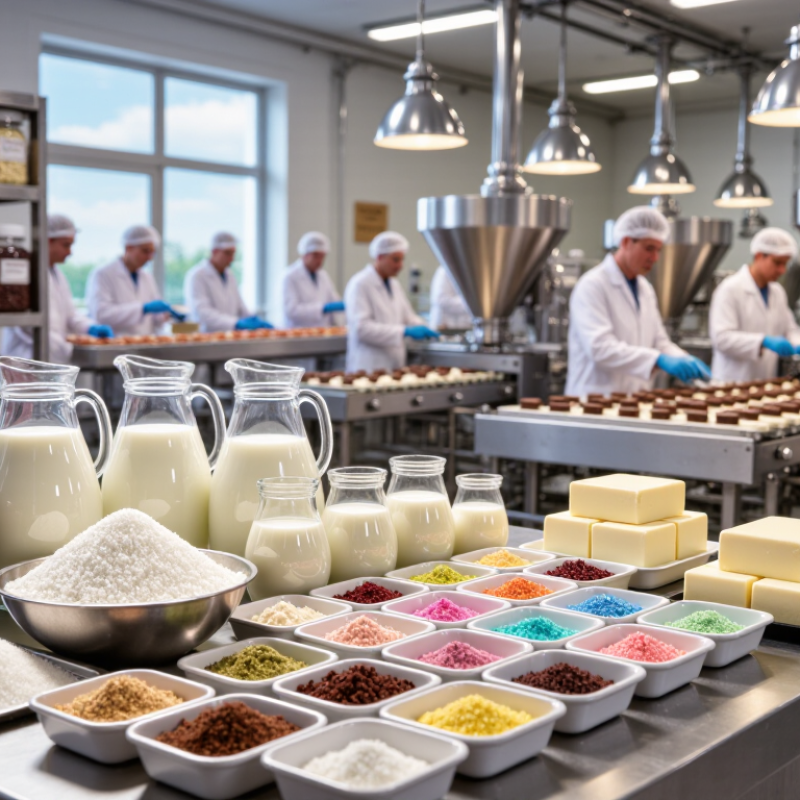
How to Choose a Confectionery Ingredients Supplier?

Define Your Confectionery Ingredient Requirements

How to Choose a Confectionery Ingredients Supplier?

Define Your Confectionery Ingredient Requirements

Supplier selection begins with a precise ingredient brief. Define the product, process, and consumer expectation before requesting quotations. Specify sweetness, color, flavor, texture, melting point, and shelf-life targets. Include batch size and equipment limitations. A coating for molded chocolate needs different performance from a soft caramel filling. Small details matter.

Consumer expectations also shape the specification. The 2024 IFIC Food & Health Survey reported that 74% of Americans were trying to limit or avoid sugar. This may require reduced-sugar systems, bulking agents, or high-intensity sweeteners. However, lower sugar can change moisture migration and texture. The brief should include acceptable compromises. It may still be incomplete.

Raw material risk deserves equal attention. The International Cocoa Organization’s 2023/24 report projected a global cocoa deficit of 478,000 tonnes. Such pressure can affect price, availability, and lead times. Ask suppliers for origin information, allergen controls, certificates of analysis, microbiological limits, and traceability records. Request storage conditions and transport requirements too. For sensitive fillings, confirm water activity and viscosity during pilot testing. A sample may perform well in a laboratory, yet fail after repeated production. Define approval criteria before testing, not afterward.

Assess Supplier Quality and Food Safety Standards

How to Choose a Confectionery Ingredients Supplier?

Assess Supplier Quality and Food Safety Standards

A reliable confectionery ingredients supplier should provide more than attractive samples. Ask for current certificates, product specifications, allergen statements, and certificates of analysis for every lot. Documents matter. Verification matters more.

During an assessment, inspect how the supplier controls receiving, storage, production, and dispatch. Ingredients should be stored off the floor, clearly labeled, and protected from moisture. Temperature records should be available for sensitive materials. Check whether employees understand hygiene procedures, not merely sign training sheets.

Traceability is essential. A supplier should identify raw materials, processing dates, equipment, and shipment details through one lot code. Request a mock recall record. It can reveal weak links quickly. Review testing for microbiological hazards, allergens, foreign materials, and other relevant risks. HACCP-based systems and recognized food safety certifications can support confidence, but they do not replace your own assessment.

I once treated a polished audit report as complete evidence. That was a mistake. A short factory visit showed inconsistent label checks near the packing line. Small gaps can become expensive problems. Ask how complaints are investigated and how corrective actions are verified. The best suppliers share inconvenient findings, retain samples, and explain delays honestly. Price still matters, but unstable quality can cost more through rejected batches, production stoppages, and damaged trust.

Compare Product Range, Certifications, and Technical Support

How to Choose a Confectionery Ingredients Supplier?

A broad product range looks attractive, but it can hide important gaps. Check whether the supplier offers cocoa ingredients, sweeteners, emulsifiers, colours, flavours, and texturising agents for your specific products. I would request samples for a chocolate filling, chewy caramel, and baked coating. Performance matters more than catalogue size. Ask for consistent particle size, melting behaviour, taste, and storage requirements. A supplier with fewer ingredients may provide better control and faster sourcing.

Certifications deserve careful comparison. Request current certificates for food safety systems, such as HACCP or ISO 22000. Review allergen management, traceability, hygiene controls, and testing procedures. Do not rely on a logo alone. Ask for batch records, specifications, certificates of analysis, and contaminant testing information. Check whether the documents match the actual production site. Small details matter.

Technical support can prevent expensive trial batches. Ask whether specialists can help with dosage, temperature control, viscosity, and shelf-life testing. Good support should include clear troubleshooting advice, not vague emails. During one formulation trial, a minor change in fat content caused a rough texture after cooling. A useful supplier would investigate the process, not simply suggest another product. Response speed also matters. However, support quality may vary between projects, so test it before signing a long-term agreement.

Evaluate Pricing, Supply Capacity, and Delivery Reliability

Supplier pricing should be measured beyond the invoice. Compare ingredient cost, minimum order quantity, testing fees, storage, and freight. The FAO reported that its Food Price Index averaged 2.1% lower in 2024 than in 2023, but agricultural markets remained exposed to weather and energy shocks. Ask suppliers for a 12-month price history, adjustment rules, and written quotations with validity periods. A low price can hide expensive delays.

Supply capacity needs evidence, not confident promises. Request monthly production capacity, current utilization, backup facilities, and documented quality controls. Check whether the supplier can reserve safety stock for seasonal confectionery demand. Review batch records and recent audit findings when possible. Also test a realistic order, such as several pallets with your required packaging and specifications. Capacity often looks impressive on paper.

Delivery reliability deserves measurable targets. UNCTAD states that maritime transport carries over 80% of world trade by volume, so port congestion and route disruption can quickly affect ingredients. Ask for historical on-time-in-full performance, average lead time, and emergency response procedures. A practical contract can define delivery windows, notification deadlines, and replacement responsibilities. Do not rely on one optimistic forecast. I once underestimated customs clearance time; the ingredient arrived safely, but production still stopped. Supplier reviews should examine actual delivery records, not only sales presentations.

How to interpret the chart: A confectionery ingredients supplier should be evaluated across more than price alone. This illustrative 0–100 procurement scorecard compares pricing competitiveness, supply capacity, delivery reliability, quality consistency, and minimum-order flexibility. Higher scores indicate stronger purchasing performance and lower supply risk.

Verify the Supplier Before Making a Long-Term Choice

A confectionery ingredients supplier should be verified before signing a long-term contract. Product samples can look excellent, yet documents may reveal weak controls. The WHO estimates that unsafe food causes 600 million illnesses worldwide each year. That figure makes supplier verification a practical necessity, not paperwork.

Request recent certificates, audit reports, allergen controls, and traceability records. Check whether each certificate covers the actual production site. Ask for a mock recall using one lot number, from delivery records to the original raw material. The response should be quick and precise. It should not depend on vague promises. Grand View Research valued the global confectionery market at approximately USD 242.53 billion in 2022, with projected growth through 2030. As demand expands, reliable documentation becomes even more important.

Visit the facility when possible. Observe ingredient storage, moisture control, pest prevention, and staff hygiene. Ask how deviations are investigated and corrected. Request independent test results for microbiological quality, contaminants, and composition. Some suppliers provide polished files but struggle with simple questions. That is a warning. My own practical preference is to test consistency across several production batches, not just approve one attractive sample. Still, verification is never perfect. Transport delays, seasonal crops, and formulation changes can expose hidden weaknesses. Build review points into the contract, including annual audits, change notifications, and clear rejection procedures. Supplier selection is ongoing work.

FAQS

What should a confectionery ingredient brief include?

Define the product, process, batch size, and equipment limits. Include sweetness, colour, flavour, texture, melting point, and shelf-life targets. Small details matter.

Why should consumer expectations affect ingredient selection?

Many consumers seek lower-sugar products. Reduced sugar can change moisture migration, texture, and sweetness balance. Set acceptable compromises before requesting samples. The brief may still be incomplete.

How can a supplier support different confectionery applications?

A chocolate coating, soft caramel, and baked filling need different performance. Ask about viscosity, melting behaviour, particle size, and storage requirements. Catalogue size is not enough.

What raw material documents should buyers request?

Request origin details, allergen controls, traceability records, and certificates of analysis. Also review microbiological limits, storage conditions, and transport requirements. Documents should match the actual production site.

How should sensitive fillings be tested?

Check water activity and viscosity during pilot production. Test the filling after repeated processing, cooling, and storage. Laboratory results can mislead.

Are certifications enough when comparing suppliers?

No. Review food safety systems, hygiene controls, allergen management, and testing procedures. Ask for batch records and contaminant testing information. A certificate alone proves little about daily performance.

What technical support should a supplier provide?

Specialists should help with dosage, temperature control, viscosity, and shelf-life testing. They should offer clear troubleshooting advice. Vague emails are not enough.

How can buyers evaluate supplier support before a long-term agreement?

Request samples for several applications, such as filling, caramel, and coating. Observe response speed and the quality of technical advice. A minor fat change may create rough texture after cooling. Test support early.

Conclusion

Choosing the right Confectionery Ingredients Supplier begins with clearly defining your product requirements, including ingredient types, quality specifications, flavor profiles, texture goals, packaging needs, and expected order volumes. A reliable supplier should demonstrate strong food safety practices, consistent quality control, traceability, and compliance with relevant industry standards. It is also important to compare the supplier’s product range, certifications, customization options, and technical support to ensure they can meet both current and future production needs.

Beyond product quality, evaluate pricing, minimum order quantities, production capacity, lead times, storage conditions, and delivery reliability. A competitive supplier should offer transparent costs and dependable communication without compromising quality. Before making a long-term commitment, request samples, review documentation, confirm references where appropriate, and conduct a small trial order. This verification process can help identify potential risks and ensure the supplier is capable of providing safe, consistent, and dependable confectionery ingredients for sustained business growth.

Emma

Emma

Emma is a dedicated marketing professional with a deep expertise in our company's offerings. With a solid track record in the industry, she brings a wealth of knowledge to her role, ensuring our products are presented with clarity and enthusiasm. Emma frequently updates our professional blog,......