
0%

Choosing a global Beverage Ingredients Supplier is no longer a simple price comparison. Formulation teams now examine taste, traceability, regulatory readiness, sustainability, and delivery resilience. A supplier may offer an attractive citrus flavor, yet fail when documentation, allergen controls, or regional labeling requirements change.

Recent industry reports show why this decision matters. Grand View Research identifies continued growth in the global beverage ingredients market, driven by functional drinks, clean-label products, and changing consumer preferences. Innova Market Insights’ Top Ten Trends 2024 also highlights wellness, naturality, and personalized nutrition. Meanwhile, the International Food Information Council’s 2024 Food & Health Survey confirms that taste remains a leading factor in food and beverage choices. The numbers vary by market definition. That matters.

Lu Ann Williams, Global Insights Director at Innova Market Insights, has emphasized a practical industry truth: “Taste is still king.” Her point is easy to underestimate. A beverage can carry impressive vitamin claims, but consumers may reject it after one unpleasant sip. The glass on the tasting table still tells the truth.

This guide presents 10 practical tips for evaluating a Beverage Ingredients Supplier across regions. It considers sample consistency, technical support, certifications, minimum order quantities, lead times, and crisis communication. It also asks harder questions about origin data and environmental claims. No supplier scorecard is perfect. Some evidence will remain incomplete. That is the uncomfortable part. Good procurement teams document those gaps, test products under real conditions, and avoid choosing a partner based only on a polished brochure.
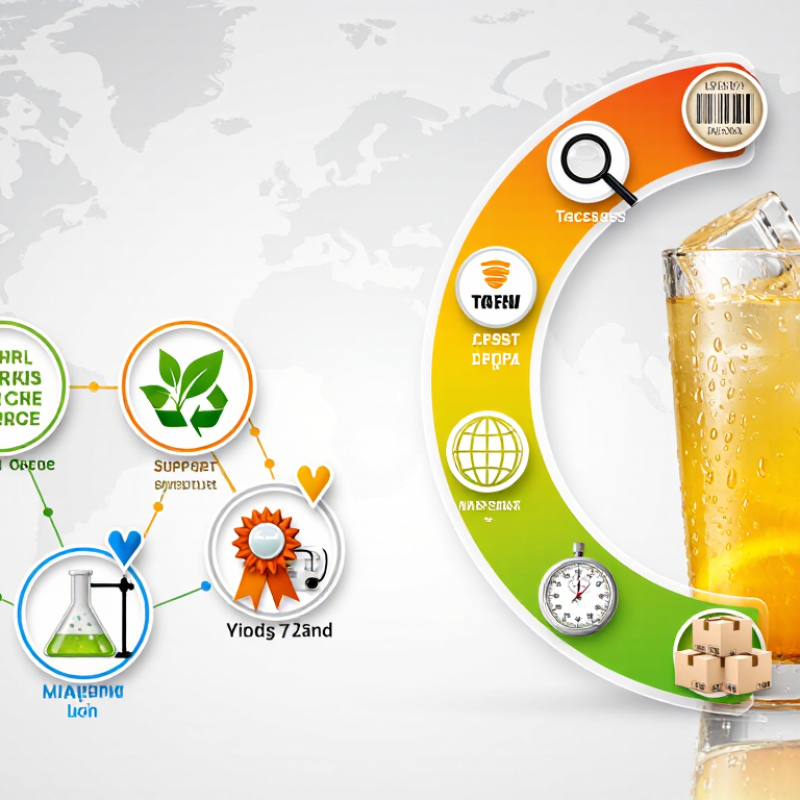
10 Tips for Choosing a Global Beverage Ingredients Supplier

Define Ingredient Needs Using Codex’s Seven HACCP Principles

When selecting a global beverage ingredients supplier, define needs through Codex’s seven HACCP principles, not a broad product label. A beverage powder may require controls for allergens, pathogens, foreign particles, pesticide residues, and moisture. Ask suppliers to map each hazard from processing through loading, transport, and receipt. The written specification should state identity, purity, microbiological limits, allergen status, packaging, shelf life, and storage temperature. Details matter.

Use principle two to identify critical control points, such as heat treatment, filtration, metal detection, or controlled drying. Set measurable critical limits, including time, temperature, water activity, or particle size. Monitoring plans should name the instrument, frequency, responsible person, and required calibration. Compare the truck reading with the product core temperature. Then review the seal and lot code.

Require corrective actions for failed limits, including segregation, investigation, disposition, and notification. Verification should include audits, trend reviews, laboratory testing, and traceability exercises. Records must remain readable and retrievable across languages and time zones. Codex also expects the system to be reviewed when ingredients, equipment, or regulations change. A supplier may provide impressive certificates yet explain little about a specific lot. That gap matters. My checklist would still be imperfect. I would revisit it after the first shipment and ask what evidence was missing.

Set Safety Thresholds Against WHO’s 600M Annual Foodborne Cases

10 Tips for Choosing a Global Beverage Ingredients Supplier

The World Health Organization estimates that nearly 600 million people suffer foodborne illness each year. That figure should shape every supplier conversation. Set written safety thresholds before requesting quotations. Define limits for pathogens, mycotoxins, heavy metals, pesticide residues, allergens, and foreign particles. Do not accept vague promises.

Check these ten points: 1, documented hazard analysis; 2, accredited laboratory testing; 3, batch-specific certificates of analysis; 4, supplier audit access; 5, traceable farm and factory records; 6, controlled storage humidity; 7, validated transport conditions; 8, clear allergen controls; 9, rapid recall procedures; 10, regulatory support for each destination market. Ask how often tests occur, not only whether testing exists.

Real inspections reveal useful details. A clumped powder may signal moisture exposure, even when packaging looks intact. Request sealed samples from different production lots. Compare color, aroma, solubility, and microbial results. Ask for test methods and detection limits. A low result is meaningless without a reliable method.

Set stricter internal limits when your drink targets children, older adults, or sensitive consumers. Supplier documents can contain gaps. We have all seen paperwork that looked complete until one missing lot code stopped traceability. Treat that weakness seriously. Recheck thresholds after a formulation change, a new harvest, or a change in transport routes. Safety is not a one-time purchase decision.

10 Tips for Choosing a Global Beverage Ingredients Supplier - Set Safety Thresholds Against WHO’s 600M Annual Foodborne Cases

No. Selection Tip Safety Dimension Recommended Threshold or Requirement Evidence to Request Why It Matters
1 Confirm the global food-safety baseline Food-safety management system Require a documented system based on HACCP principles. Prefer a current, independently audited certification to ISO 22000 or an equivalent recognized scheme. Valid certificate, scope covering the ingredient and production site, latest audit report, and closure evidence for major nonconformities. HACCP is the internationally recognized preventive approach for identifying and controlling biological, chemical, and physical hazards.
2 Set microbiological release criteria Pathogen and indicator testing Use destination-market legal criteria and product-specific risk assessments. Where applicable, require Salmonella: absent in 25 g; do not apply this value universally to every beverage ingredient. Batch-specific certificate of analysis, sampling plan, test method, laboratory accreditation, and test date linked to the lot number. Pathogens can survive in dry powders, botanical materials, concentrates, and other ingredients even when the final beverage is processed.
3 Control mycotoxin exposure Aflatoxins and other mycotoxins Set limits according to the importing country, commodity, and intended use. Do not use one global limit because legal maximum levels differ by jurisdiction and product category. Risk-based mycotoxin panel, accredited laboratory report, raw-material origin, storage records, and evidence of supplier monitoring. Cereals, nuts, spices, coffee, cocoa, and some botanicals may be vulnerable to fungal contamination during cultivation or storage.
4 Verify pesticide compliance by market Pesticide maximum residue limits Require compliance with the maximum residue limits of every destination market. Use Codex limits where adopted, but apply the importing jurisdiction’s rules when they are stricter or different. Multi-residue analytical report, approved pesticide list, agricultural records, country-of-origin information, and documented change-control process. The same ingredient may be legal in one market and non-compliant in another because residue limits and approved uses differ.
5 Screen heavy metals and process contaminants Lead, cadmium, arsenic, mercury, and relevant contaminants Define limits using the legal requirements for the ingredient and beverage category. Include inorganic arsenic where rice-derived ingredients are used and include lead or cadmium where the raw-material risk warrants it. Accredited laboratory results, method detection limits, raw-material risk assessment, and documented corrective-action records. Contaminants may originate from soil, water, equipment, processing aids, packaging, or environmental exposure.
6 Make allergen management explicit Allergen identification and cross-contact control Require a complete allergen declaration against the destination market’s list. Require documented segregation, validated cleaning, label review, and change notification for allergen-related changes. Allergen statement, formulation disclosure, line-clearance records, cleaning validation, shared-equipment assessment, and label approval workflow. Allergen rules vary by jurisdiction, and undeclared cross-contact can create serious consumer-safety and recall risks.
7 Test authenticity and detect adulteration Identity, composition, and economically motivated adulteration Define identity specifications for each ingredient, such as botanical identity, strength, purity, moisture, and marker compounds. Apply enhanced testing to high-risk or high-value ingredients. Approved specification, reference or retention sample, identity testing, authenticity assessment, and documented investigation of out-of-specification results. Adulteration can reduce safety, invalidate label claims, and introduce undeclared substances into beverages.
8 Require one-step-back and one-step-forward traceability Lot-level traceability Every shipment should have a unique lot code and be traceable to the immediate supplier and raw-material source, while outbound records identify the immediate customer and shipped quantities. Traceability procedure, lot genealogy, receiving and dispatch records, mass-balance results, and a completed mock-trace exercise. Rapid lot identification limits the volume and duration of a withdrawal or recall when a hazard is discovered.
9 Set transport and storage controls Temperature, humidity, integrity, and contamination prevention Use product-specific limits. For chilled ingredients, define a validated temperature range; for dry ingredients, define maximum moisture or water-activity criteria and protect against condensation, pests, and foreign matter. Validated storage specification, temperature or humidity records, packaging-integrity checks, cleaning logs, pest-control records, and deviation reports. Poor environmental control can support microbial growth, toxin formation, caking, oxidation, or contamination during international transport.
10 Measure recall readiness and communication speed Incident response and corrective action Set an internal target to identify affected lots and notify customers within 4 hours of confirming a serious food-safety incident. Complete at least one documented mock recall every 12 months. Recall procedure, emergency contact list, notification template, mock-recall results, root-cause analysis, and corrective-action effectiveness review. WHO estimates that contaminated food causes approximately 600 million illnesses and 420,000 deaths each year; response speed is critical when a hazard reaches the market.
Data notes: The approximately 600 million annual foodborne illnesses and 420,000 deaths are estimates published by the World Health Organization from its global foodborne disease burden assessment. Microbiological, chemical, allergen, pesticide, and contaminant limits must be confirmed against the current laws of the importing country and the specific ingredient category. The four-hour incident-notification target and annual mock-recall frequency are recommended internal supplier-qualification targets, not universal legal requirements.
Reference framework: World Health Organization foodborne disease burden estimates; Codex Alimentarius General Principles of Food Hygiene and HACCP guidance; Codex principles for traceability and product tracing; applicable national rules for microbiological criteria, pesticide maximum residue limits, contaminants, allergens, labeling, and product recall.

Verify FDA FSVP, ISO 22000, and Third-Party Certification

A global beverage ingredients supplier should provide clear evidence of regulatory control, not polished promises. For U.S.-bound shipments, ask how the importer meets FDA Foreign Supplier Verification Program requirements. Review hazard analyses, supplier approval records, corrective actions, and verification activities. These documents should match the actual ingredient and destination.

Tip 1: Request current certificates and check their scope, expiration date, facility address, and covered products. ISO 22000 can show a structured food safety management system, but it does not guarantee perfect performance. Ask for recent audit findings and closure evidence. A certificate alone is not enough.

Tip 2: Examine independent third-party certification. Confirm the certification body’s accreditation and audit frequency. Ask whether audits are announced, unannounced, or partly remote. You should also compare specifications, certificates of analysis, allergen controls, and traceability records. A practical test is useful: request a mock recall using one batch number. Can the supplier identify production details quickly? Maybe not perfectly. That response reveals more than a brochure.

Tip 3: Verify how changes are controlled. Ingredient sources, processing aids, packaging, and testing laboratories can change without obvious warning. Require written notification before material changes affect safety or compliance. Keep communication records, approval forms, and shipment documents in one reviewable file. Experienced buyers still miss small inconsistencies, especially across time zones. Independent laboratory testing may therefore be worthwhile for higher-risk ingredients.

Audit Traceability and Logistics Against FAO’s 13.2% Food-Loss Rate

10 Tips for Choosing a Global Beverage Ingredients Supplier

Tip: Verify the supplier’s traceability from farm or processor to your facility. FAO reports that 13.2% of food was lost globally between harvest and retail in 2021. That figure excludes retail waste. Ask for batch codes, harvest dates, processing records, and withdrawal procedures. Tip: Request recent audit reports, not polished promises. Check whether records match physical labels, pallets, and warehouse entries. Small mismatches deserve attention.

Tip: Test logistics under real conditions. Review temperature controls, humidity monitoring, packaging strength, and delivery routes. A delayed container can damage sensitive powders, concentrates, or botanicals. Ask for shipment data and corrective-action records. Tip: Measure lead-time reliability across several months. One successful delivery proves little. Also confirm backup routes, regional storage, and customs documentation. These details protect continuity when ports close or demand changes suddenly.

Tip: Evaluate laboratory controls, supplier training, and complaint response times. Certificates should identify methods, dates, and responsible laboratories. Tip: Compare specifications with independent test results when the ingredient affects taste or safety. Tip: Inspect allergen segregation and cleaning validation. Tip: Review water, energy, and waste records. Tip: Confirm ethical sourcing evidence. Tip: Ask how losses are recorded and reduced. Tip: Include performance targets in the contract. Tip: Reassess the supplier annually. No audit is perfect. We still miss things. A careful supplier welcomes uncomfortable questions and provides evidence before problems reach the filling line.

10 Tips for Choosing a Global Beverage Ingredients Supplier

Audit traceability and logistics against FAO’s global food-loss benchmark.

Global food loss increased from 13.0% in 2016 to 13.2% in 2021 between harvest and retail, according to the UN SDG 12.3.1a food-loss indicator reported by FAO.

10 supplier-selection checks

  1. Request end-to-end batch traceability from farm or processor to delivery.
  2. Verify documented food-safety certifications and the scope of each certificate.
  3. Audit supplier controls for temperature, humidity, light exposure, and transit time.
  4. Review historical delivery performance, including on-time and in-full results.
  5. Confirm testing plans for microbiological, chemical, allergen, and authenticity risks.
  6. Check recall procedures, mock-recall frequency, and maximum trace-back time.
  7. Assess packaging suitability for long-distance transport and warehouse handling.
  8. Require documented origin, lot, harvest, processing, and expiry information.
  9. Evaluate contingency plans for ports, extreme weather, geopolitical disruption, and shortages.
  10. Use measurable quality agreements covering specifications, claims, deviations, and corrective actions.

A supplier that can demonstrate accurate records, controlled logistics, rapid recall capability, and transparent corrective actions is better positioned to reduce avoidable loss across the beverage-ingredient supply chain.

Source: Food and Agriculture Organization of the United Nations, UN Sustainable Development Goal indicator 12.3.1a, Food Loss Index.

Compare Cost, Sustainability, Innovation, and Backup Capacity

When comparing global beverage ingredient suppliers, do not judge price from the quotation alone. Calculate total landed cost, including freight, duties, testing, storage, and handling. A cheaper powder can become expensive after moisture damage or delayed customs clearance. Request three years of pricing history, minimum order quantities, payment terms, and clear adjustment rules. Cost needs context.

For sustainability, ask for measurable evidence rather than polished claims. Verify certificates, audit dates, corrective actions, and data boundaries. Review water use, emissions, packaging weight, and farm-level traceability. Some reports look complete but lack site-level evidence. Ask for practical details, such as recycled content percentages and transport distances. That gap matters.

Innovation should include technical support, not only new product ideas. Ask whether specialists can adjust flavor, color, solubility, or dosage for your process. Run small trials and record dissolution time, sediment, flavor consistency, and shelf-life results. Backup capacity is equally important. Confirm production sites, alternate origins, safety stock, and recovery procedures. Ask for realistic lead times during crop shortages or port disruptions. Test an interruption scenario before signing a long contract. I value honest limitations more than confident promises. No supplier is perfect. A slightly imperfect plan, openly managed, can outperform a cheaper plan that fails during peak season.

FAQS

What documents should a beverage ingredient supplier provide for regulatory verification?

Request current certificates, hazard analyses, supplier approvals, corrective actions, and verification records. Check product scope, expiration dates, and facility addresses. A certificate alone is not enough.

How can I test a supplier’s traceability system?

Request a mock recall using one batch number. The supplier should identify production records, shipment details, and warehouse locations quickly. Labels and records should match. Small mismatches matter.

What should I review during a third-party certification audit?

Confirm the certification body’s accreditation and audit frequency. Ask whether audits are announced, unannounced, or partly remote. Review recent findings and closure evidence. Polished promises are weak evidence.

How can I evaluate logistics reliability?

Review temperature controls, humidity records, packaging strength, delivery routes, and customs documents. Compare delivery performance across several months. One successful shipment proves little.

What backup arrangements should a supplier have?

Confirm alternate production sites, backup origins, safety stock, regional storage, and recovery procedures. Ask about realistic lead times during crop shortages or port disruptions. Test an interruption scenario.

How should I calculate the true cost of an ingredient?

Include freight, duties, testing, storage, handling, and possible customs delays. Request pricing history, minimum order quantities, payment terms, and adjustment rules. Cost needs context.

How can I verify sustainability claims?

Ask for measurable data on water use, emissions, packaging weight, transport distances, and farm-level traceability. Check site-level evidence and audit dates. Some reports look complete but are not.

What technical tests should I run before approving an ingredient?

Conduct small trials and record dissolution time, sediment, flavor consistency, color, dosage, and shelf-life results. Compare supplier specifications with independent laboratory results. Results may not be perfect.

How should change control be managed?

Require written notice before changing ingredient sources, processing aids, packaging, or testing laboratories. Keep approvals, communication records, and shipment documents together. Experienced buyers still miss small inconsistencies.

How often should supplier performance be reassessed?

Reassess suppliers annually and review complaints, audit findings, delivery reliability, laboratory controls, and corrective actions. No audit catches everything. Keep asking uncomfortable questions.

Conclusion

Choosing the right Beverage Ingredients Supplier requires a structured, risk-based evaluation rather than focusing only on price. Start by defining ingredient specifications, quality requirements, allergen controls, and handling procedures in line with the seven HACCP principles. Establish clear safety thresholds and testing plans that reflect the scale of global foodborne illness concerns, including the widely cited estimate of hundreds of millions of cases each year. Suppliers should also demonstrate appropriate food safety systems, regulatory readiness, and credible third-party certifications.

A thorough review should include traceability from source to delivery, documented recall procedures, storage conditions, and reliable logistics, especially given the significant level of food loss worldwide. Beyond compliance, compare total cost, sustainability practices, product consistency, research and development capabilities, and backup production capacity. A strong supplier should communicate transparently, respond quickly to quality issues, and provide dependable support as your beverage portfolio grows. This balanced approach helps reduce operational risks while promoting safety, efficiency, innovation, and long-term supply continuity.

Ethan

Ethan

Ethan is a dedicated marketing professional with a profound expertise in the company's offerings. With years of experience in the industry, he possesses an impressive understanding of market trends and customer needs, making him an invaluable asset to the team. His commitment to excellence shines......