
Food & Beverage Industry Insights
Discover market intelligence, commodity trends, ingredient sourcing news, and expert technical guidance from American International Foods, Inc.
Market News & Commodity Trends
Stay ahead of price fluctuations, supply chain updates, and raw material availability across key food manufacturing sectors.
Expert Ingredient Solutions
Explore articles on organic, non-GMO, gluten-free, and conventional ingredient innovations for modern processors.
10 Tips for Choosing Industrial Baking Ingredients?
Table of Contents
- Defining Product Requirements and Baking Objectives
- Evaluating Ingredient Functionality and Processing Performance
- Checking Quality, Safety, Compliance, and Supply Reliability
- Comparing Costs, Storage Needs, and Production Compatibility
- Conducting Trials and Selecting the Best Ingredient Combination
- FAQS
- Conclusion
- Related Posts
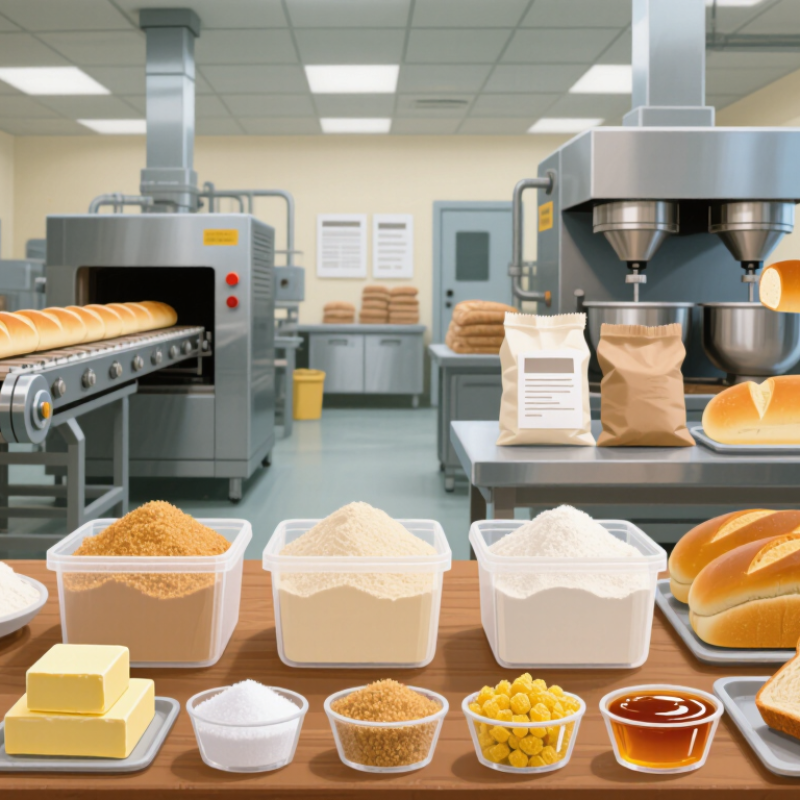
Choosing Industrial Baking Ingredients is a technical decision that affects taste, texture, safety, and production costs. A flour may perform well in a test kitchen but fail on a high-speed production line. Fat, enzymes, sweeteners, emulsifiers, and leavening agents must work together under real factory conditions.
This guide presents ten practical tips for evaluating ingredients with greater confidence. It considers supplier experience, batch consistency, storage stability, allergen controls, documentation, and regulatory compliance. It also examines performance details, such as dough elasticity, oven spring, moisture retention, and crumb softness after several days. Small differences matter. A two-minute mixing change can alter the final loaf.
Reliable decisions require more than attractive specifications. Request representative samples, review certificates, and conduct controlled trials using your own equipment. Compare results across multiple batches, not one successful bake. Supplier communication matters too, especially when harvests, energy costs, or processing methods change.
No checklist is flawless. A lower price can hide higher waste. A premium ingredient may still be unsuitable for your formula. Even experienced teams sometimes overlook packaging conditions or transportation temperature. That is why careful testing, documented observations, and honest review should guide every purchase. With a structured approach, manufacturers can select ingredients that support consistent quality, efficient production, and dependable customer expectations.
Defining Product Requirements and Baking Objectives
10 Tips for Choosing Industrial Baking Ingredients
Defining Product Requirements and Baking Objectives
Before comparing industrial baking ingredients, define what the product must achieve. A soft sandwich loaf needs a different flour profile than a crisp biscuit. Write down the target texture, flavor, color, volume, serving size, and shelf life. That sounds obvious. Yet teams often choose ingredients from price lists before setting clear baking objectives.
Turn each objective into a measurable requirement. For example, specify flour protein, water absorption, dough strength, mixing time, and expected loaf volume. Record the oven temperature and production speed too. These details affect how an ingredient performs on the factory line. If the product must remain soft for seven days, test moisture migration and crumb firmness over time. A single fresh sample cannot prove shelf-life performance.
Use supplier specifications, allergen statements, traceability records, and certificates of analysis as decision evidence. Check that documents match local food regulations and your internal quality controls. Then run controlled pilot batches. Measure dough temperature, proofing behavior, bake loss, color, and final texture. I once treated a small hydration difference as harmless; it later caused uneven dough handling. That mistake was useful, but expensive. Repeat trials across different production days, because ingredients and operators can vary. Cost matters, but a cheaper ingredient may increase waste, downtime, or customer complaints. Track those hidden effects before approving the final formula.
Evaluating Ingredient Functionality and Processing Performance
10 Tips for Choosing Industrial Baking Ingredients
Evaluating Ingredient Functionality and Processing Performance
In industrial baking, ingredient choice begins with function, not appearance. Flour must provide predictable protein, water absorption, and dough strength across production batches. Fats influence aeration, tenderness, machinability, and finished shelf stability. Sweeteners affect browning, moisture retention, fermentation, and crust texture. These roles often overlap. During plant trials, I compare mixing time, dough temperature, deposit weight, and oven spring. A small change in absorption can stop a high-speed line.
Processing performance deserves equal attention. Test ingredients under real shear, resting, proofing, and baking conditions. A bench formula may look excellent, yet fail after several hours of continuous production. Measure tolerance, not only the first loaf. Record scaling accuracy, dough recovery, sticking, tearing, and release from conveyors. For emulsifiers, enzymes, or fibers, dosage must be judged against target texture and process speed. Overprocessing can create a false sense of consistency. That lesson is easy to miss.
Reliable evaluation also requires supplier documentation, traceability, allergen controls, and consistent specifications. Ask for practical data on batch variation, storage conditions, and recommended handling. Then challenge those claims with pilot runs. Do not ignore local water quality or seasonal humidity. Both can shift dough behavior more than expected. I have sometimes favored a technically elegant ingredient that operators found difficult to meter. That was a poor choice. Usability belongs in the specification.
10 Tips for Choosing Industrial Baking Ingredients
Evaluating Ingredient Functionality and Processing Performance
The chart uses a practical 1–5 screening scale to compare common baking ingredient groups across key industrial requirements. Higher scores indicate stronger typical contributions to the listed function; actual performance depends on formulation, dosage, process conditions, and storage.
Selection Checklist
- Define the target product texture, volume, crumb, and shelf life before selecting ingredients.
- Check flour strength, protein level, water absorption, and batch consistency.
- Evaluate ingredient performance at production scale rather than relying only on laboratory tests.
- Measure mixing tolerance, dough temperature, machinability, proofing response, and bake loss.
- Review moisture migration, staling rate, and texture after storage.
- Confirm compatibility with the full formula, including acids, salts, enzymes, fats, and sweeteners.
- Compare dosage efficiency and total cost per finished unit.
- Verify food safety, allergen status, regulatory requirements, and documentation.
- Assess supply continuity, lot-to-lot variation, and storage stability.
- Use controlled trials and measurable acceptance criteria before final approval.
Checking Quality, Safety, Compliance, and Supply Reliability
Industrial baking ingredients deserve more than a low-price comparison. Quality must remain stable across batches, seasons, and transport conditions. The WHO estimates that contaminated food causes 600 million illnesses and 420,000 deaths annually (Estimates of the Global Burden of Foodborne Diseases). That risk makes supplier verification essential.
Tip: Request recent certificates of analysis, allergen statements, and microbiological results. Tip: Check moisture, particle size, color, and functional performance against written specifications. Tip: Confirm traceability from processing plant to delivery lot. Tip: Audit sanitation controls, not only paperwork. Tip: Test a retained sample during pilot production. Small deviations matter. A flour can look normal yet weaken dough performance.
Compliance also requires practical evidence. Tip: Verify alignment with applicable food-contact, labeling, allergen, and contaminant rules in every destination market. Tip: Prefer suppliers using recognized food-safety management systems, such as ISO 22000-based controls. Tip: Check recall procedures and response times. The FAO Food Outlook 2024 places global cereal production near 2.85 billion tonnes, showing the scale of this supply network. Tip: Ask for dual sourcing, safety stock, and documented business-continuity plans. Tip: Review delivery performance quarterly, including late shipments and temperature excursions. Tip: Test approved alternatives before an emergency occurs. Cost still matters, but I have seen buyers overvalue price and underestimate disruption. A perfect scorecard is unrealistic. Supplier data can also be incomplete, so challenge assumptions and record corrective actions.
10 Tips for Choosing Industrial Baking Ingredients? - Checking Quality, Safety, Compliance, and Supply Reliability
| No. | Selection Tip | Ingredient Dimension | Recommended Checks | Practical Acceptance Criteria | Review Frequency | Risk Level |
|---|---|---|---|---|---|---|
| 1 | Define the required specification | Functional performance | Set target ranges for moisture, protein, ash, particle size, color, pH, or other properties relevant to the recipe. | A documented specification is approved before purchasing, with test methods and permitted tolerances clearly stated. | Before approval and annually | High |
| 2 | Verify microbiological safety | Pathogen and hygiene control | Review risk-based testing for pathogens, yeast, mold, indicator organisms, and environmental contamination where applicable. | Results comply with applicable food-safety requirements and the internal risk assessment; no unexplained adverse trends are present. | Each lot or risk-based schedule | High |
| 3 | Check chemical and physical hazards | Contaminant prevention | Assess allergen cross-contact, mycotoxins, pesticide residues, heavy metals, foreign materials, and undeclared additives according to ingredient risk. | Current certificates or analytical results support compliance, and controls address foreseeable contamination routes. | Per lot or supplier risk review | High |
| 4 | Confirm allergen and labeling information | Allergen management | Obtain an ingredient statement, allergen declaration, cross-contact statement, country of origin, and storage requirements. | Declarations are complete, consistent with the formulation, and suitable for the intended market's labeling rules. | At approval and whenever formulation changes | High |
| 5 | Review regulatory compliance | Legal and document compliance | Check specifications, safety data where relevant, additive permissions, certificates of analysis, and food-contact or organic documentation when required. | All required documents are current, traceable to the supplied lot, and applicable to the destination market. | Before onboarding and annually | Medium |
| 6 | Evaluate processing performance | Dough and finished-product behavior | Conduct pilot baking trials for absorption, mixing tolerance, fermentation, machinability, volume, texture, color, and shelf life. | Performance remains within the approved product profile under representative production conditions. | Each new source or major change | Medium |
| 7 | Assess batch-to-batch consistency | Uniformity and process control | Compare historical certificates, analytical results, sensory attributes, and trial outcomes across multiple production lots. | Key characteristics show stable results, with deviations investigated and corrective actions documented. | Quarterly or by lot trend review | Medium |
| 8 | Verify packaging and storage stability | Shelf life and handling | Review packaging integrity, lot coding, best-before dating, temperature and humidity limits, and protection from moisture, pests, and odors. | Packaging is sealed and undamaged; remaining shelf life meets the purchasing requirement at delivery. | Every delivery | Medium |
| 9 | Measure supply reliability | Capacity and delivery performance | Review lead time, minimum order quantity, forecast flexibility, fill rate, on-time delivery history, and contingency capacity. | The supply plan supports production demand, with agreed service targets and documented escalation contacts. | Monthly performance review | Medium |
| 10 | Confirm traceability and continuity plans | Recall readiness and business continuity | Test lot traceability, recall communication, change notification, backup sourcing, inventory coverage, and documented emergency procedures. | A supplied lot can be traced through receiving and production records, and an alternative supply route is identified for critical ingredients. | At least annually and after incidents | High |
Comparing Costs, Storage Needs, and Production Compatibility
10 Tips for Choosing Industrial Baking Ingredients
Comparing ingredient prices starts with usable cost, not the figure on a quotation. A low-cost flour may absorb less water, reduce yield, or create more waste. Calculate cost per finished kilogram, including freight, handling, and rejected batches. Check minimum order quantities, payment terms, and price stability before approving a supplier. Small differences become significant during continuous production.
Storage can quietly damage a good purchasing decision. Review shelf life, packaging strength, temperature limits, and humidity tolerance. A pallet of powdered ingredients needs dry, clean storage with limited temperature swings. Moisture moves. It causes clumping and uneven dosing. Keep a simple stock rotation record, and inspect bags for broken seals or compacted material. I once underestimated warehouse humidity; the ingredient passed inspection but performed poorly after several weeks.
Production compatibility needs practical testing. Compare mixing time, dough temperature, fermentation response, and final volume. Test ingredients on the actual line, not only in a laboratory bowl. Check whether the ingredient feeds smoothly through hoppers and fits existing dosing equipment. Confirm technical documents, batch consistency, allergen statements, and traceability records. Pilot runs should include normal and difficult conditions. One successful trial is not enough. Production changes, and formulas sometimes expose weaknesses we missed. Keep samples from each lot for controlled comparisons.
Conducting Trials and Selecting the Best Ingredient Combination
10 Tips for Choosing Industrial Baking Ingredients?
Conducting trials is more reliable than choosing ingredients from specifications alone. I prefer controlled tests that reveal how flour, fat, water, enzymes, and emulsifiers interact. Small batches matter. My early trials were too narrow; I changed one ingredient while ignoring mixing speed and dough temperature. That mistake produced misleading results.
FAO’s Food Outlook, published in November 2023, estimated global wheat production at about 785 million tonnes. High supply, however, does not ensure consistent baking performance. Protein, ash, damaged starch, and moisture can change absorption and dough strength. USDA FoodData Central lists whole-wheat flour at roughly 13.7 grams of protein per 100 grams. Use this figure as a starting reference, not a fixed target.
Build a trial matrix with three flour levels, two hydration levels, and one controlled mixing time. Measure dough temperature, machinability, proof height, volume, crumb structure, and day-three softness. Keep samples in identical packaging. Record failures, too. A loaf that looks attractive after cooling may become dry overnight. Sensory panels should score flavor, bite, aroma, and aftertaste separately. Instrumental texture data can support those observations, but it cannot replace them. I also check supplier certificates, allergen controls, lot variation, and storage conditions before approving a combination. The best formula is often not the cheapest one; it is the most stable under ordinary production pressure.
FAQS
Start with the product goal.
A cheaper ingredient may increase waste, downtime, or customer complaints.
Protein, ash, damaged starch, and moisture can change dough behavior.
Review supplier specifications, allergen statements, traceability records, and analysis certificates.
Pilot trials show how flour, fat, water, enzymes, and emulsifiers interact.
Test several flour levels and hydration levels under controlled conditions.
Ask panelists to score flavor, bite, aroma, and aftertaste separately.
Test softness and moisture migration across several days.
Conclusion
Choosing the right Industrial Baking Ingredients is essential for achieving consistent quality, efficient production, and customer satisfaction. The process should begin by defining product requirements, such as texture, flavor, appearance, shelf life, and nutritional goals. Each ingredient must then be evaluated for its functionality and processing performance, including mixing behavior, dough stability, baking tolerance, and influence on the final product.
In addition to performance, manufacturers should carefully check ingredient quality, food safety, regulatory compliance, and supply reliability. Cost, storage conditions, shelf life, handling requirements, and compatibility with existing production equipment are also important considerations. Before making a final decision, conduct controlled trials to compare different options and combinations under real production conditions. By analyzing both technical results and commercial factors, bakeries can select an ingredient system that supports reliable output, efficient operations, and consistent product quality.

Blog Tags: