
0%

Why Choose Quality Sauce and Dressing Ingredients?

Quality Sauce and Dressing Ingredients are the quiet foundation of flavor, safety, and consumer trust. A glossy vinaigrette may look appealing, yet its performance depends on the oil’s stability, the vinegar’s acidity, and the consistency of every spice particle. Grand View Research’s 2024 market analysis identifies continued growth in the global sauces, dressings, and condiments sector, driven by convenience, premium products, and changing dietary preferences. This growth raises expectations. Customers want clean labels, recognizable ingredients, reliable taste, and safer choices.

Quality must be measurable.

Professional sourcing teams examine supplier audits, certificates of analysis, allergen controls, and batch traceability. These checks help manufacturers respond when a shipment smells slightly rancid or a dressing separates in storage. The World Health Organization recommends less than 2 grams of sodium daily for adults, encouraging careful formulation rather than automatic salt reduction. A well-designed ingredient system can support flavor without hiding defects behind excessive sodium, sugar, or artificial intensity. That requires practical testing, not attractive packaging alone.

Innova Market Insights’ global food and beverage trend reports also highlight consumer interest in naturalness, transparency, and functional benefits. However, “natural” is not a complete quality definition. It can still conceal inconsistent color, weak emulsion stability, or difficult supply chains. This is where buyers can get it wrong. Reliable Sauce and Dressing Ingredients should perform in the laboratory, during production, and on the customer’s plate. Small details matter: a smooth pour, a clean finish, and the same familiar flavor from the first bottle to the last.
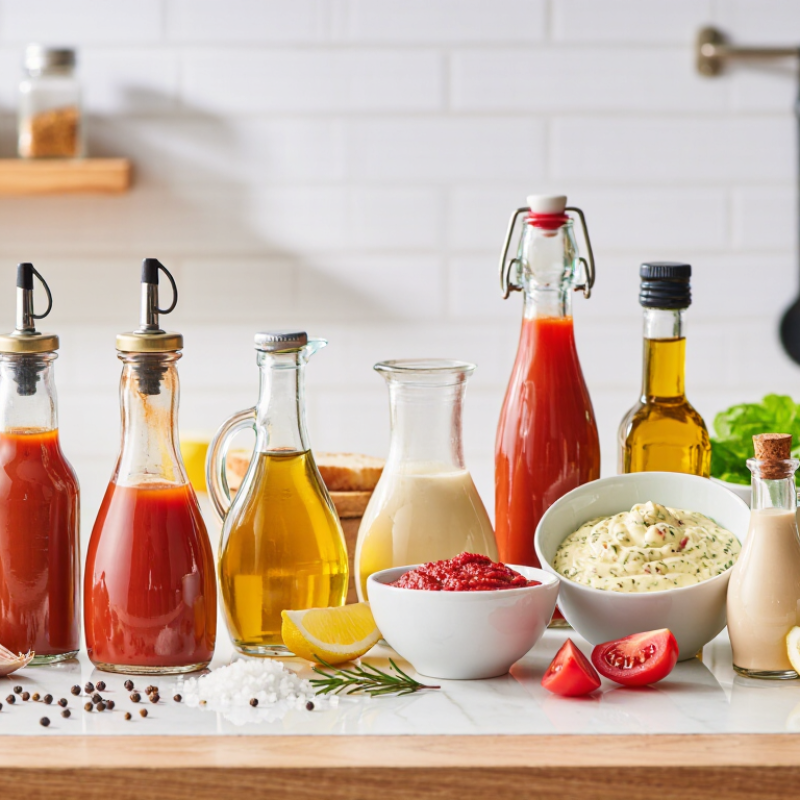
Why Choose Quality Sauce and Dressing Ingredients?

What Defines Quality Sauce and Dressing Ingredients?

What defines quality sauce and dressing ingredients? It starts with clear specifications, not attractive packaging. A quality oil should have a clean aroma, stable performance, and a documented origin. Vinegar needs balanced acidity, without harsh or flat notes. Spices should smell fresh when opened, not dusty or strangely muted. These details affect taste, texture, and shelf stability.

In production trials, I check ingredients before mixing a full batch. A small spoonful can reveal rancid oil, excessive salt, or weak seasoning. Emulsifiers should create a smooth texture without making the dressing feel heavy. Thickeners must perform consistently across different temperatures. Food safety records, allergen controls, and laboratory testing also matter. Reliable suppliers provide lot information, specifications, and storage guidance. That evidence supports professional decisions.

Quality is not always perfect. I once judged a dressing by its bright appearance and overlooked its short aftertaste. The formula needed more testing. Mistakes like this show why sensory checks should support, not replace, technical data. Ingredients should arrive in clean containers and remain protected from heat, light, and moisture. A practical review includes taste, smell, color, viscosity, and batch consistency. Small variations can become obvious when a sauce is served over warm food or stored for several weeks. Freshness matters. So does honest documentation.

How Ingredient Quality Shapes Flavor, Texture, and Aroma

Why Choose Quality Sauce and Dressing Ingredients?

Ingredient quality becomes obvious when a sauce touches the tongue. Fresh herbs bring a clean, green aroma. Ripe tomatoes add natural sweetness and gentle acidity. Cold-pressed oils can create a rounder mouthfeel than heavily processed alternatives. I have noticed this during kitchen testing, especially in simple dressings with only three or four ingredients. There is nowhere for weakness to hide.

Texture depends on more than taste. A stable emulsion feels smooth instead of oily or separated. Fine spices spread evenly, while coarse particles may create an unpleasant grit. Egg yolk, mustard, or natural gums can support structure when used carefully. Too much thickener, however, makes a dressing feel heavy and dull. Small changes matter.

Aroma also changes during heating, storage, and mixing. Fresh garlic may smell bright at first, then become harsh after extended cooking. Delicate herbs can lose their character inside an overly acidic sauce. Reliable producers should monitor freshness, moisture, particle size, and batch consistency. Clear testing records help, but they cannot replace tasting with trained attention. I still misjudge salt levels sometimes. That mistake reminds me to check flavor at serving temperature, not straight from the mixing bowl.

The Role of Freshness, Purity, and Nutritional Value

Quality sauce and dressing ingredients begin with freshness. Crisp herbs, ripe citrus, and properly stored oils preserve brighter aromas and cleaner textures. They also reduce the need for excessive salt, sugar, or strong artificial flavors.

The World Health Organization recommends fewer than 2,000 milligrams of sodium daily, equal to less than 5 grams of salt. A single spoonful can quietly move consumers toward that limit.

Purity matters too. Suppliers should verify identity, allergens, microbial safety, and storage conditions through documented testing. Codex Alimentarius standards provide useful benchmarks for food additives and contamination control.

Nutritional value should remain visible, not hidden behind attractive packaging. USDA FoodData Central shows how oils, seeds, herbs, and dairy ingredients can add different amounts of energy, protein, fiber, or micronutrients.

Yet “natural” does not automatically mean healthier. A fresh dressing can still contain too much sodium or added sugar. This is where product development needs honest review.

I have seen formulas improve after removing one unnecessary ingredient, though flavor sometimes becomes less dramatic. That trade-off deserves testing.

Tips:

Check harvest or production dates where available. Store oils away from heat and direct light. Compare sodium and added-sugar values per serving, not per bottle. Use clean utensils to prevent contamination. Taste the sauce after dilution, because serving size changes the nutritional picture. Freshness is helpful, but verified sourcing and balanced formulation make it dependable.

How Quality Ingredients Improve Product Safety and Stability

Why Choose Quality Sauce and Dressing Ingredients?

Quality ingredients create a stronger safety foundation. The World Health Organization estimates that 600 million people develop foodborne illness each year, with 420,000 deaths. Poor raw materials can introduce pathogens before production begins. Fresh eggs, spices, oils, and vegetables need documented supplier controls. They also need proper storage.

Ingredient quality affects stability inside the bottle. Low-moisture spices can reduce contamination risks when handled correctly. Refined oils can slow rancidity, while consistent emulsifiers help prevent separation. The FDA Food Code emphasizes time, temperature, hygiene, and ingredient control as key safety measures. A sauce with unstable acidity may support microbial growth. Small pH changes matter. Water activity matters too.

Manufacturers should verify certificates with laboratory testing, not paperwork alone. That lesson is easy to overlook. The Codex Alimentarius food hygiene principles support hazard analysis and preventive controls across the supply chain. Clear batch records can connect a finished bottle to one supplier and one delivery date. In practice, I would also inspect drum seals, note unusual odors, and question inconsistent color. Quality is not a magic shield. Processing errors, weak sanitation, or poor transport can still damage a safe formula. Reliable ingredients improve the margin for error, but they do not replace disciplined production.

Why Choose Quality Sauce and Dressing Ingredients? - How Quality Ingredients Improve Product Safety and Stability

Quality Dimension Ingredient or Formulation Attribute Contribution to Product Safety Contribution to Product Stability Measurable Indicator or Reference
Acidity Control Consistent food-grade acids such as vinegar or citric acid, accurately standardized during formulation. A controlled acidic environment limits the growth of many pathogenic microorganisms. Acidified foods are commonly managed at a finished equilibrium pH of 4.6 or below to control the growth of Clostridium botulinum. A stable pH helps preserve flavor, color, and preservative performance throughout the intended shelf life. Finished equilibrium pH; pH meter calibration; batch-to-batch pH records.
Water Activity Appropriate salt, sugar, solids, or humectant levels selected to reduce available water without compromising taste. Lower water activity restricts microbial growth. Most bacteria generally require aw above approximately 0.90, while many molds can grow at lower values. Reduced available water can slow microbial spoilage and certain chemical and enzymatic reactions. Water activity (aw) measured at a controlled temperature; formulation solids and salt checks.
Microbiological Quality Clean-label or conventional ingredients produced under hygienic controls with documented microbiological specifications. Lower initial microbial loads reduce the risk of spoilage and help improve the reliability of the validated preservation process. Lower background contamination reduces the likelihood of gas formation, off-odors, separation, and premature spoilage. Total aerobic count, yeast and mold count, coliform testing, and pathogen testing as applicable to the product.
Emulsion Performance Consistent emulsifiers, mustard components, gums, or proteins with controlled hydration and functional properties. A stable emulsion reduces localized water-rich areas and helps maintain uniform distribution of acid, salt, and preservatives. Improves resistance to oiling-off, creaming, sedimentation, and viscosity loss during storage and transport. Viscosity, droplet-size distribution, centrifuge stability, and separation after temperature cycling.
Preservative Performance Food-grade preservatives used at legally permitted levels and selected for compatibility with product pH and water activity. Organic acids and other approved preservatives can inhibit targeted bacteria, yeasts, or molds when the formulation and processing conditions support their activity. Helps extend microbiological shelf life and maintain sensory quality after opening, where applicable. Preservative concentration, product pH, challenge-test results, and regulatory compliance review.
Oxidation Control Fresh, properly stored oils and spices with controlled peroxide values and suitable antioxidant protection. Oxidation control primarily protects quality, while good raw-material handling also reduces the risk of using degraded or contaminated ingredients. Slows rancid flavors, color fading, aroma loss, and deterioration of oil-based components. Peroxide value, anisidine value, dissolved oxygen, headspace oxygen, and sensory evaluation.
Color and Flavor Integrity Fresh herbs, spices, vegetables, and natural flavor components with controlled moisture, purity, and oxidation status. Verified ingredient identity and supplier controls reduce the risk of adulteration, undeclared allergens, and contamination. Consistent raw materials reduce color drift, flavor variation, sediment formation, and sensory deterioration. Color measurement, sensory panel results, moisture content, identity testing, and supplier documentation.
Allergen Management Clearly specified ingredients and controlled sources for items such as eggs, milk, soy, mustard, sesame, or tree nuts. Accurate allergen declarations and effective segregation or validated cleaning controls help prevent undeclared allergen exposure. Consistent ingredient specifications reduce formulation changes that may affect texture, flavor, and processing performance. Approved supplier status, allergen matrix, label verification, and cleaning-validation records.
Thermal Process Compatibility Ingredients selected to tolerate the validated heating, hot-fill, pasteurization, or aseptic process used for the product. A validated thermal process reduces viable microorganisms when time, temperature, container, and product conditions are properly controlled. Appropriate heat tolerance helps preserve viscosity, color, flavor, and emulsion structure during processing. Time-temperature records, cold-spot validation, fill temperature, closure integrity, and process deviation records.
Packaging Compatibility Formulation and ingredients compatible with the selected bottle, pouch, cap, liner, and oxygen-barrier requirements. Suitable packaging helps prevent leakage, post-process contamination, and loss of container integrity. Effective oxygen and moisture barriers help preserve color, aroma, texture, and microbiological quality. Seal strength, leak testing, oxygen-transmission rate, migration compliance, and storage trials.

Note: The values and references shown are general food-safety principles. Final specifications should be established through product-specific validation, regulatory review, shelf-life testing, and documented hazard analysis.

Choosing Ingredients for Consistent Sauce and Dressing Performance

Quality sauce and dressing ingredients do more than improve flavor. They help every batch behave predictably. In production, a dressing should pour smoothly from the first bottle to the last. Stable emulsifiers can reduce separation, while carefully selected oils support a clean mouthfeel. Acidity also matters. A balanced acid level protects flavor clarity and supports consistent texture. Small changes can be visible. A sauce may look glossy at 9 a.m., then appear thin after storage. That difference can affect filling, serving, and customer expectations. We have seen consistency improve when teams record ingredient temperatures, mixing speed, and holding time. Good records turn guesswork into useful evidence.

Choosing ingredients requires more than reading a specification sheet. Suppliers should provide traceable documentation, clear allergen information, and reliable testing data. These details support safer decisions and repeatable results. Ingredient performance should also match the process. A thickener that works in a cold blend may behave poorly after heating. Salt, sugar, and acid can change viscosity in ways that are easy to miss. Test the full formula under real conditions. Use the same equipment when possible. Still, no formula is perfect. A recipe may need adjustment after seasonal raw material changes. That is not failure; it is a reminder to keep checking.

Tips: Compare samples at the intended temperature. Measure viscosity, pH, separation, and color over time. Keep a retained sample from each trial. Taste with a simple checklist. Avoid relying on memory. Ask whether a small cost saving could create larger process problems. Sometimes, it can.

Why Choose Quality Sauce and Dressing Ingredients?

Choosing Ingredients for Consistent Sauce and Dressing Performance

Consistent ingredient quality helps manufacturers control acidity, flavor balance, texture, and shelf-life performance. The chart shows typical pH ranges for common acidic sauce and dressing categories. Lower pH generally indicates greater acidity, while the exact target depends on the recipe, processing method, and food-safety validation.

Typical category ranges; actual commercial formulations may vary.

FAQS

Why does freshness matter in sauce and dressing ingredients?

Fresh herbs, ripe citrus, and properly stored oils provide brighter aromas and cleaner textures. Freshness helps. It does not guarantee a healthier formula.

Can fresh ingredients reduce sodium, sugar, or artificial flavor use?

Strong natural flavors may reduce the need for excessive salt, sugar, or artificial flavoring. The result still needs nutritional testing. Fresh dressing can remain high in sodium.

How can ingredient purity improve food safety?

Suppliers should verify ingredient identity, allergens, microbial safety, and storage conditions. Documented testing matters more than attractive paperwork. Check it carefully.

What storage practices protect oils and other ingredients?

Store oils away from heat and direct light. Use clean utensils. Inspect seals, odors, and unusual color before production.

How do quality ingredients improve sauce stability?

Suitable oils and consistent emulsifiers can reduce rancidity and separation. Stable acidity also supports safer, more predictable products. Small pH changes matter.

How can manufacturers keep every batch consistent?

Record ingredient temperatures, mixing speed, holding time, viscosity, pH, separation, and color. Test samples at the intended serving temperature. Memory is unreliable.

What nutritional details should consumers compare?

Compare sodium and added sugar per serving, not per bottle. Also review energy, protein, fiber, and micronutrients. Serving size changes the picture.

Why should formulas be tested under real production conditions?

Thickeners, salt, sugar, and acid may behave differently after heating or storage. Keep a retained sample from each trial. Seasonal ingredients can change performance.

Do quality ingredients replace sanitation and process controls?

No. Quality ingredients improve the safety margin, but they cannot replace hygiene, temperature control, or disciplined processing. That limitation is easy to forget.

How should sauce quality be evaluated before release?

Check appearance, aroma, texture, acidity, separation, and taste using a simple checklist. Taste after dilution. A dramatic flavor is not always the best result.

Conclusion

Quality Sauce and Dressing Ingredients are the foundation of products that deliver reliable taste, texture, aroma, and overall appeal. High-quality ingredients are carefully selected for their freshness, purity, natural characteristics, and nutritional value. They help create balanced flavors, smooth or appealing textures, and inviting aromas while allowing the finished sauce or dressing to reflect its intended recipe. Using wholesome ingredients can also support a cleaner formulation and a more satisfying consumer experience.

Ingredient quality plays an important role in product safety, shelf stability, and manufacturing consistency. Properly sourced and handled ingredients can help reduce quality risks, maintain freshness, and support predictable performance during processing and storage. Consistent ingredients also make it easier to control viscosity, separation, flavor intensity, and appearance from batch to batch. By choosing dependable Sauce and Dressing Ingredients, producers can improve product reliability, protect quality throughout its usable life, and create sauces and dressings that meet clear standards for taste, safety, and performance.

Ethan

Ethan

Ethan is a dedicated marketing professional with a profound expertise in the company's offerings. With years of experience in the industry, he possesses an impressive understanding of market trends and customer needs, making him an invaluable asset to the team. His commitment to excellence shines......